
Lifestyle
Ravennati Explained: Origins, Culture & Traditions

Introduction to Ravennati Culture
Stunning mosaics and ancient sites aren’t the only things that bring visitors to the lovely Italian city of Ravenna. Its cultural heritage is a masterpiece of the Ravennati people. Their long history has influenced their cuisine, festivals, and customs for generations. Delving into Ravennati culture is like jumping into a time machine; it’s a dynamic mashup of ancient practices and modern living.
Ravenna is a magical place that embraces both its history and modern ideals; as we explore its roots and inspirations, you will see how it does this. Every detail, from tantalizing cuisine to exciting celebrations, reveals a tale that must be uncovered. Now let’s explore the unique and fascinating aspects of the Ravennati way of life!
The Origins of Ravennati People
The Ravennati are an ancient people whose lineage is interwoven with Ravenna’s storied past. This dynamic city in northeastern Italy has been shaped by many different cultures. Here the Romans first built a fortress, leaving behind their cultural traditions and majestic architecture.
With the passage of time, Ravenna rose to prominence as a major Byzantine city. The distinctive creative works and intellectual endeavors of this time period had a profound impact on the people who lived through it. The Ravennati’s fascinating social fabric emerged from the fusion of Greek and Latin civilizations.
Also, new practices and traditions were brought to the Middle Ages through migrations. Local mythology and lifestyle were enriched by each group’s mark. We may thank these historical tiers for helping to shape the Ravennati culture of today.
Influences on Ravennati Culture
The cultural fabric of the Ravennati is a complex web spun from many different eras. For centuries, Ravenna has served as a meeting place for people from all over the world, and the city’s inhabitants have felt the profound impact of this cultural melting pot.
Both language and architecture show signs of Roman influence. The local dialects are enriched by the echoes of Latin origins that many Ravennati still speak.
Intricate mosaics decorate churches around the region, a contribution from the Byzantine Empire. Artistic brilliance and religious commitment are on full display in these breathtaking pieces of art.
Also, different cultures and ways of life have been brought to different areas through different migrant waves over the years. We were able to incorporate the distinctive customs of each group into our everyday lives.
The Ravennati people’s artistic expression, musical taste, and culinary traditions are all impacted by contemporary culture. Their culture is dynamic and ever-relevant because of this constant change.
Traditional Food and Drinks in Ravenna
The cuisine of Ravenna is a beautiful mosaic of tastes. Traditional cuisine offers a window into the region’s storied past and bountiful agricultural output. Tortellini, stuffed with herbs and savory meats, is a dish that pasta fans will adore.
Additionally, seafood is highly esteemed in the native cuisine. Grilled or stewed, fresh fish from the Adriatic Sea is a popular dish.
Flatbreads like piadina, which use few ingredients but pack a big flavor punch, are a must-try. Cheese, ham, or veggies are common fillings for this hearty dish.
Sangiovese and Trebbiano, two local wines from Ravenna’s vineyards, are perfect for washing it all down.
Indulge your sweet craving with the city’s zuppa inglese, a creamy confection topped with chocolate and custard. It’s sure to gratify all dessert aficionados!
Celebrations and Festivals in Ravenna
The lively events and festivals that take place in Ravenna are a reflection of the city’s rich history. An annual highlight, the Ravenna Festival showcases theater, dance, and music in breathtaking historical settings. Participating artists hail from every corner of the world.
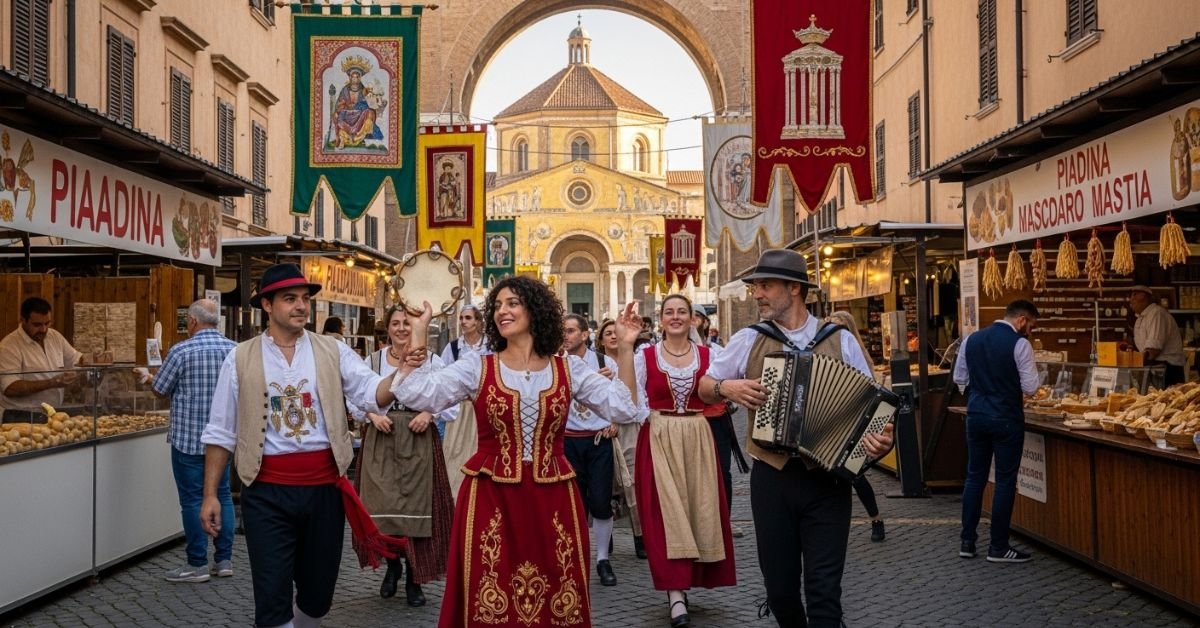
The feast of San Vitale, which celebrates the patron saint of the city, is another important event. Colorful costumes and traditional music resound as locals take part in parades. Gathering as a group is a joyful experience.
Ravenna is famous for its mosaic art, which is honored during the Biennale del Mosaico. Visitors may observe artists at work and participate in classes to master this age-old skill.
Exquisite floats and whimsical masks add to the carnival season’s enthusiasm, making for a magical setting that everyone can enjoy. The rich tapestry of Ravennati culture is unveiled with each festivity, which is sustained by beloved customs and shared memories.
Unique Customs and Beliefs in Ravenna
The distinctive traditions and beliefs of Ravenna are a reflection of its dynamic past. The annual feast honoring Saint Apollinaris, the patron saint of the city, is one such custom. In a vibrant parade that showcases their dedication via song and dancing, the locals take part every year.
Crafting mosaics is another fascinating tradition. For the Ravennati, this age-old art form is deeply significant to their culture. It represents more than simply aesthetics; it also stands for solidarity and camaraderie.
Many of the villagers hold dear the beliefs embodied in the stories of folklore that have been handed down through the ages. Tales like this provide moral lessons or historical context by fusing mythological and real-world elements.
Holiday meetings with family are precious times for passing down blessings and strengthening bonds between generations. Every ceremony has deep significance, bringing families closer together as they pay tribute to their history.
Conclusion: Preserving the Rich Culture of Ravenna
A unique window into the lives and customs of the Ravennati people may be found in the rich tapestry of their culture. Their rich history and strong sense of community are evident in every facet of their being, from their singular origins to the factors that molded their identity.
Tortellini and piadina, for example, are more than simply dishes; they represent the tales that have been told and eaten for generations. By exhibiting music, dance, and art that bring people together through their ancestry, celebrations like Sagra di San Giovanni bring life to the city’s ambiance.
Ravennati culture is characterized by its unusual practices and beliefs, which serve to emphasize the importance of family, reverence for the natural world, and eternal spiritual connections. It is critical for Ravennans and visitors alike to fight preserve these beloved traditions as the city adapts to modernity.
Doing so will guarantee that this extraordinary cultural environment will be passed down through the generations, along with knowledge and a sense of pride. This charming city is steeped in tradition yet welcoming of change, and its lovers have vowed to keep this promise by working tirelessly to preserve Ravennati culture.