
Education
Recyclatanteil: Meaning, Calculation, and Benefits at a Glance

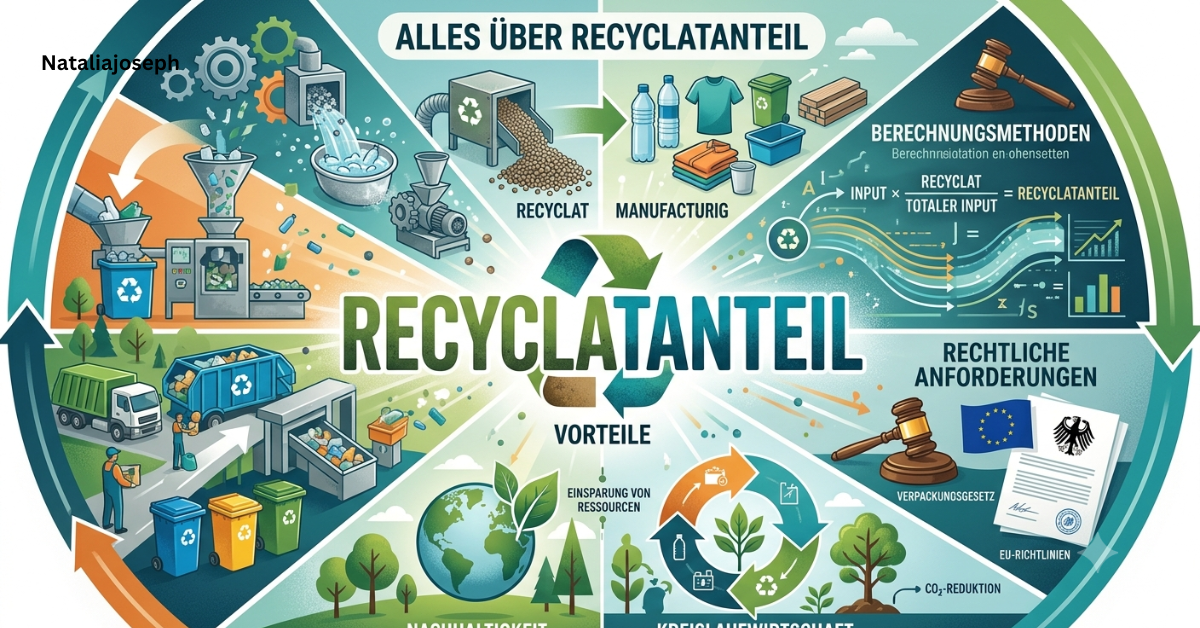
One phrase that is gaining currency in the world’s fast evolving sustainability movement is “Recyclatanteil.” But how significant is it? How can companies make the most of it to encourage sustainability? Businesses are feeling the heat from eco-conscious customers who want them to do their part to save the earth by cutting down on trash.
If you want to create a change, you must understand Recyclatanteil. An important step toward lowering our carbon footprint, this idea centers on using recycled materials in manufacturing operations. In this post, we will go into the concept of Recyclatanteil, its calculation, and the reasons it is significant for businesses and the environment. Now, let’s explore this new method in detail!
Understanding the Calculation Method
To find out how much recycled material is in a product, you need to calculate its Recyclatanteil. This metric is useful for companies to evaluate the damage they do to the environment.
First, you need to know how much the finished product weighs in order to compute it. The next step is to determine how much weight each recycled material had in its manufacture.
Simply divide the weight of recycled material by the overall weight of the product, and then multiply the result by 100 to obtain the percentage. A Recyclatanteil of 25% would be the result, for instance, of a 1,000 gram product including 250 grams of recyclate.
Not only does this computation help with regulatory compliance, but it also makes things more transparent for customers who are becoming more concerned about sustainable practices. Companies can make better decisions about their materials and processes when they understand this metric.
Advantages of Incorporating Recyclatanteil in Production Processes
There are a lot of upsides of using Recyclatanteil in manufacturing. The most obvious benefit is the drastic lessening of manufacturing’s impact on the environment. Businesses can reduce their impact on the environment and save money by making use of recycled materials.
Saving money is another consideration. In many cases, the use of recycled materials ends up saving money. This has the dual benefit of reducing production costs and increasing profit margins.
Additionally, the brand’s reputation is crucial. Sustainable practices are attracting more and more consumers. Companies who go for a higher Recyclatanteil are sending a message to consumers about how serious they are about being green.
Companies are more likely to innovate when they use recyclables. In doing so, it encourages businesses to reconsider their current practices and create innovative goods that combine sustainability with practicality. Unparalleled products and services can emerge from this creative frenzy, giving businesses a leg up in crowded marketplaces.
It promotes industry-wide moves towards greener practices, which has a ripple effect that goes beyond individual enterprises as well.
You May Like: Trucofax Explained: Features, Uses & Complete Guide (2026)
Case Studies: Real-Life Examples of Companies Utilizing Recyclatanteil
A number of pioneering businesses have already begun using Recyclatanteil in their manufacturing procedures. Coca-Cola is one well-known company that has pledged to use 50% recycled material in their PET bottles by the year 2030. In addition to cutting down on waste, this program is going to be the gold standard in the beverage business.
Case in point number two: IKEA. By using recycled materials into its products, the furniture manufacturer is striving to build a circular business model. Incorporating Recyclatanteil improves sustainability and appeals to consumers who are concerned about the environment.
The Parley collection by Adidas, which features garments constructed from recycled materials and ocean debris, has garnered a lot of attention in the fashion industry. Customers that care about the environment will appreciate this fresh take on things, and it shows how brands can have an impact by sourcing responsibly.
These cases show that implementing Recyclatanteil is about more than simply meeting regulations; it’s a chance for companies to be creative and establish a stronger relationship with their customers.
Challenges and Potential Solutions for Implementing Recyclatanteil
There are certain obstacles specific to implementing Recyclatanteil. The source of high-quality recycled materials is a big problem. Unfortunately, not all recyclates are up to the rigorous requirements needed for some uses.
Adding recycling into manufacturing lines requires an upfront investment in technology and procedures, which presents another obstacle. For fear of compromising product quality or performance, companies may be hesitant.
Training and education are also important. For production to run smoothly and consistently, workers need training on how to handle recycled materials.
Solutions can be found through collaboration among stakeholders. Companies can share resources and information by developing partnerships within supply chains, which makes it easier to find trustworthy sources of recyclates.
Regulatory backing is also beneficial. Companies might feel more comfortable implementing environmentally friendly policies when there are clear regulations regarding the use of recycled content.
Future Outlook and Potential Impact on Sustainability Efforts
The potential for Recyclatanteil to improve sustainability initiatives in many sectors is enormous. Businesses are starting to see the value of using recycled materials in their production lines as the world becomes more environmentally conscious.
New recycling technologies will probably make it less of a hassle to find and use good recyclates. As natural resources continue to deplete, this innovation has the potential to lessen our dependence on untapped resources.
More stringent rules on waste management and carbon footprints are possible in the future. Businesses who use Recyclatanteil today will have an easier time meeting future norms and customer expectations.
The demand for environmentally friendly products is on the rise. Incorporating Recyclatanteil into your product line is a great way to boost your eco-credentials and win over eco-conscious consumers. Therefore, this transformation signifies a revolutionary shift towards responsible production processes, rather than merely an operational one.
Conclusion
Recyclatanteil is a game-changer in environmentally responsible manufacturing; it’s not just a jargon. By grasping its definition and calculating process, firms are better able to make educated decisions regarding resource management. Incorporating recyclatanteil has obvious benefits, including a reduced impact on the environment and possible financial savings.
Practical implementations of the idea of recyclatanteil in many industries are showcased by real-life examples, which show that organisations can successfully integrate it into their operations. On a larger scale, though, these tactics still face their fair share of obstacles. For recyclatanteil to be widely used, problems of supply chain logistics and material quality must be resolved.
The future of sustainability initiatives may be drastically altered if more companies start to see the value in incorporating recycled materials into their goods. Using recyclatanteil helps promote a circular economy that constantly reuses materials and reduces waste.
In order to ensure a more environmentally friendly future, it is crucial that companies, governments, and individuals all work together to support sustainability efforts such as recyclatanteil.
Read More: Labarty Explained: Features, Uses & Complete Guide (2026)